Hi everyone,
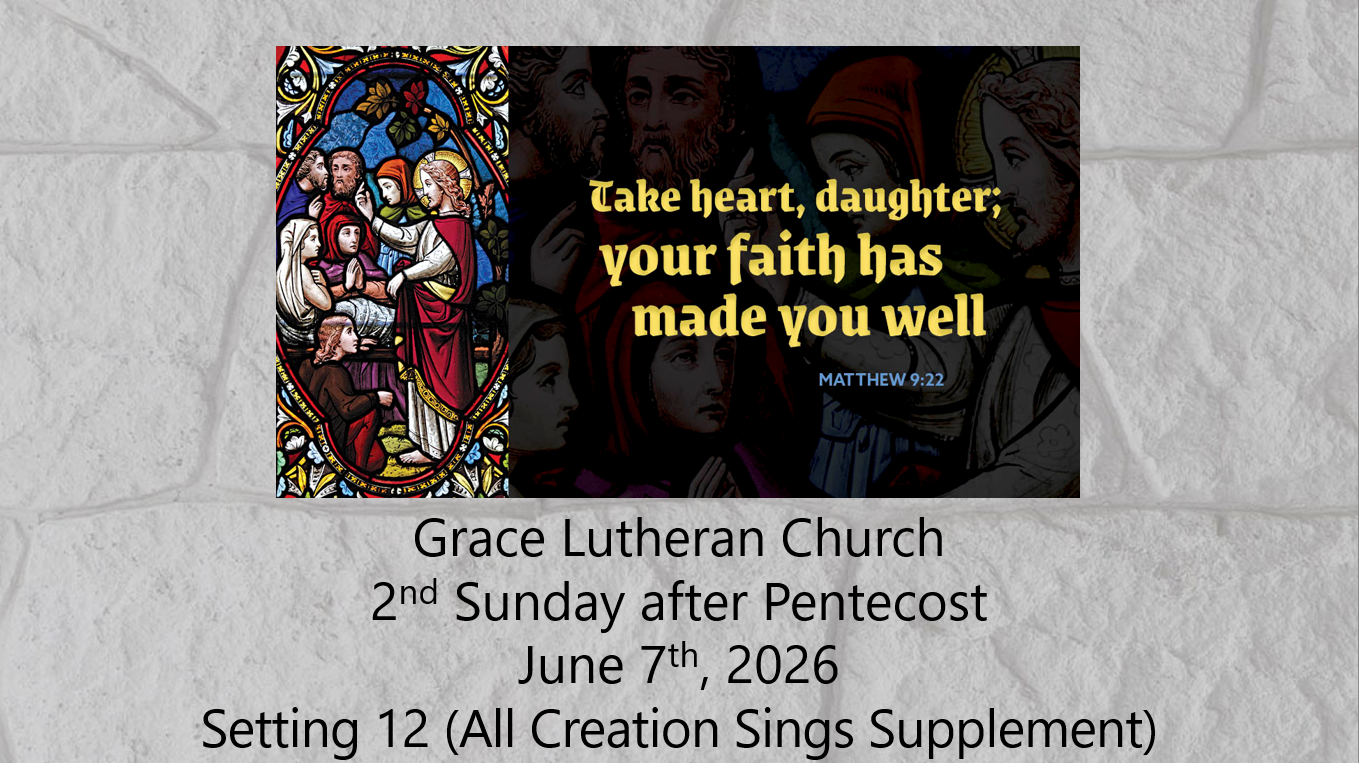
Welcome to worship for this 2nd Sunday after Pentecost, landing on June 7, 2026!
The bulletin for this service can be found here. You can use it to follow along with the liturgy of the service, or you can just use the words on your screen. The sermon will be included in the bulletin as well as on this page.
If you’d like to enhance your online worship experience, you are invited to have a lit candle in your space for most of the service, and extinguish it near the end after the sending hymn when the altar candles are extinguished. You are also welcome to participate in communion if you are comfortable, by having something small to eat and drink prepared for the appropriate time. Further instructions will be give then.
May God’s promises and truth fill you with hope and purpose, this day and always!
“What kind of a [insert random inaccurate stereotype] are you?”
Have you ever been asked that? Maybe not in those exact nonsensical words, but have people ever wondered how you fit in whatever demographic that you’re apparently in, because there was something about you that wasn’t exactly on brand with said demographic? As though you’re not from the same cookie cutter, don’t fit in that mold, aren’t exactly like that stereotype?
This might come as a surprise to you, but it’s happened to me before. In fact, it’s happened more times than I’d care to count. And with many different random stereotypes that don’t exactly describe me inserted in that oh-so-notorious blank. And I guess there’s nothing wrong with the question itself, per se, as it could come from a place of honest curiosity around one’s background and origins and why they don’t fit the preconceived stereotypes that are already solidified in the minds of the so-called experts.
Like, “what kind of an Asian are you?” the “real” Asians would ask when they learn about me as a Canadian born Asian guy. What kind of Asian doesn’t really speak anything but English? What kind of Asian doesn’t really know much about Chinese traditions? What kind of Asian doesn’t like tofu? I’ll give you a hint: he has two thumbs…
Or I’d get, “what kind of a Canadian are you?” The “real” Canadians would ask this when they see me, this Asian guy born in Canada. What kind of a Canadian doesn’t really play or watch hockey? What kind of a Canadian doesn’t love and own several copies of Anne of Green Gables and has read it multiple times over? What kind of a Canadian doesn’t get super excited by a giant flag on the side of a mountain? Same two-thumb guy over here.
And perhaps the most often one I get is, “what kind of a Christian or even pastor are you?” The real religious types would ask when they see this blend of Asian and Canadian heritage serving in a Lutheran church. What kind of a Christian listens to hip hop music (the real stuff, not the campy Canadian stuff), with explicit lyrics and everything? What kind of pastor has such a dry and sometimes mocking sense of humour? What kind of Lutheran is this Asian/Canadian guy? Still me, with two thumbs, but now maybe I’ll add a finger or two in the mix.
See what I mean? What kind of preacher would even say that?
But again, there’s nothing wrong with the question, really. There’s nothing wrong with noticing the diversity within a specific demographic. There’s nothing wrong with pointing out how individuals are distinct from other individuals. There’s nothing wrong with recognising the differences among us.
It’s just that, it becomes a problem when that difference becomes a problem.
What I mean is, for some, that difference somehow becomes offensive. Any kind of change is somehow seen as an insult. The diversity is somehow regarded as a sin. Almost like the norm, the status quo, and how things always have been is the only way things ever should be, and any variance to that is, for whatever reason, taken as morally and ethically wrong.
Now, don’t get me wrong, I’m not saying that if you’ve asked the question of “what kind of whatever is so-so” about someone or even me before, automatically means you’re some kind of bigot or racist. No, I can understand and even appreciate the humour in such a comment. But I’m just pointing out that this mentality of “change or diversity = bad” can be a real issue for many of us. While it seems more rampant now than the recent past, take it from someone who has faced it their whole lives, it’s not anything new.
I mean, look at today’s readings for example, written a couple thousands of years ago or more. They all talk about traditions, customs, and regulations and the mentality around keeping them in order to belong. They talk about the stress of keeping up with ceremonial rituals, religious definitions, and pietistic acts because they are so core to defining one’s identity. They talk about the misguided assumption that we must always fall in line, follow the rules, and figure out where the boundaries are between right and wrong, lest we be excommunicated and cast out of the tribe for not fitting in.
So even back then people struggled with this. Even in bible times people didn’t want to think outside the box. Even according to our ancient religious texts, people have always struggled with fitting in, finding a sense of belonging, and carving out an identity that would be acceptable by the masses.
But the thing is, as we read in today’s texts, fitting in the mold was never the point. Being shoehorned into the box isn’t what we’re made for. Being beholden to a stereotype is not what God describes as “the life that truly is life.”
Hosea speaks of God’s desire to be in relationship with us in spite of us not understanding. Romans tells us of God’s loving grace in spite of what we have done or left undone. Even the Psalm talks about how God will always extend God’s hand out to us even when we get caught up with our traditions and social constructs. And then the gospel reading comes at us with three very different individuals, all part of some demographic, but also totally aren’t, in their own rights.
Matthew, a Jew who sold his soul to the Romans for a paycheque. The man who we learn is a centurion by other accounts, gave up his position of power and intimidation to plead with and submit to a subordinate. And then the woman who has been ritualistically unclean for 12 years, dared to touch the cloak of a revered teacher.
What kind of a Jew collects taxes for the Roman government?
What kind of a strong oppressive soldier goes to those he’s oppressing for help?
What kind of a woman who is identified as unclean would spread that contagious uncleanliness around?
They don’t exactly fit the mold. They aren’t what people expected. They certainly would not be considered “right” in any sense of the word.
But Jesus calls them, journeys with them, and heals them. Jesus loves them, forgives them, and welcomes them into wholeness and community. Jesus breaks the mold, shatters expectations, and wipes away the stereotypes and reminds us all that the only identity that ever really needs to matter above all else, is that we are beloved children of God.
No matter who we are, where we’re from, or how well we fit in. No matter what our upbringing is, what our background might be, or the length of our rap sheet. No matter our sex, gender, or orientation. No matter what kind of what we are. We belong. We matter. We are loved.
See life isn’t about pointing out the ways that make us different, but it’s about learning new things and celebrating diversity and seeing how community can be formed in spite of it. It isn’t about drawing deeper lines to push people further from us, but about erasing those lines so we can welcome more in. It isn’t even about defining who is right or who is wrong, but it’s about forgiveness, graciousness, and seeing how we can love and be loved anyway.
So what kind of Asian am I? One that is not defined by ethnic heritage but by the gracious declaration and identity as a beloved child of God. What kind of Canadian am I? One that is not defined by borders or governments but is invited and welcomed to be a citizen of God’s kingdom. What kind of a Christian am I? One that doesn’t belong in the stereotype, doesn’t fit in the mold, doesn’t conform to the expectations, but continues to be loved, forgiven, and saved by God, now and forevermore.
As it is with all of us. None of us fit that mold 100%, no matter what we or others might think of us. None of us are exactly what is expected of us. None of us are anything less but unique individuals, with our own wants and needs and outlooks on life, and still very much a part of this community, this church, the one body of Christ.
My friends, this is what God promises to us. This is what God declares to be true. This is what God gives us faith to believe about ourselves and each other. That we, in our difference, diversity, and distinctiveness from each other, have been, are, and always will be dearly welcomed, included, and loved. Thanks be to God. Amen.