Hi everyone,
Welcome to worship for this 5th Sunday in Lent, which lands on March 22, 2026!
The bulletin for this service can be found here. You can use it to follow along with the service, or with the words that will appear on your screen. The sermon is included in the bulletin as well as on this page below the video.
To enhance your online worship experience, you are invited to have a candle in your space, lit for the majority of the service and extinguished near the end after the sending hymn, as the altar candles are extinguished. If you are comfortable, you are also welcome to participate in communion by having something small to eat and drink prepared for the appropriate time in the service. Further instruction will be given then.
May God’s gracious love lead you into faith and peace, today and always!
May the inspiration of your Word, O God, increase our faith, strengthen our trust, and deepen our love, through Jesus Christ. Amen.
I have another confession to make. Last week, if you can remember back that far, we talked about arguments and our inherent need to be right. I mentioned how I don’t like to lose arguments even though I don’t get into very many due to my being as laid-back as I am… and that was only mostly true. “Mostly” because while everything I said is true, I admit that I left some important aspects of that out. See, I neglected to mention that perhaps a bigger reason why I don’t get into many arguments is that… well, I’m not exactly a fan of conflict.
In fact, I’m so uncomfortable with it that I more often than not avoid it altogether.
Of course, things still happen and one thing still can lead to another and before I know it, I can still find myself in full-blown battles that I never wanted. But if I were given the choice, I would do what I can to de-escalate the situation as quickly as possible with the fewest number of casualties. Unfortunately when push inevitably comes to shove, those casualties usually are my pride, my need to be right, and maybe even my image and integrity as I’d sooner sacrifice myself than to jeopardize the peace. That is just how much I dislike conflict and the harsh feelings they might bring.
Now, I should say that I’m fully aware of how unhealthy this could be. A bit of conflict does a relationship good, they say, and helps to develop one’s personality, convictions, and self-worth. But I just feel like I can do all of that without the yelling, the anger, and maybe the fear of another broken relationship, which could then lead to shame, guilt, and even humiliation. Thanks, but no thanks, am I right?
And so I might try a bit too hard to brush things off and let them slide. Give others the probably enabling benefits of the doubt. Even deny myself and my own needs just to avoid that ever burdensome conflict.
I get that I’m probably a next-level and extreme case, perhaps one that should be checked out by a professional or something, but I think we’re all have these feelings to a certain extent. I think we’d all prefer not fighting over actively fighting. I think we all would rather things to be calm and not heated. I think we all, in some way or another, want to avoid conflict.
Because even if you’re not even close to being adversely avoidant to conflict like I am, you know what I mean about it being uncomfortable, don’t you? We generally don’t like to sit in those feelings, wallow in that space, or linger in the uneasy air. And this isn’t just in conflict, but pretty much any situation that brings about these “negative” emotions. The anger that can be present in conflict, yes, but also the disappointment in things not done properly or adequately, the guilt in being called out as not up to snuff, and even the sadness in regret, brokenness, and loss.
We see a lot of these emotions in the story we get in today’s gospel reading, which is probably one of the most well-known and commonly-referred-to miracles of Jesus. But while we know all about Jesus bringing his buddy Lazarus back from the dead, we might not be aware of all the other emotions present and surrounding this emotional episode.
Of course, there is sadness. I mean it’s a death, so for sure people are going to be upset, especially when the deceased is as popular and loved as Lazarus sounds to be. But there’s also the anger Martha had towards Jesus for not being there. The disappointment Mary felt for Jesus taking his time to show up. And then the condescending jabs from the people thinking that maybe this Jesus character, the guy who healed the blind man last week, isn’t all that he’s cracked up to be.
And to be honest, when I noticed all these emotions reading the story this time around, I got a bit uncomfortable. Like I felt all those things that everyone felt, the anger, sadness, and disappointment. Because, like what the heck, Jesus, why didn’t you hightail it over there to at least be with your friends during their difficult time, if not to prevent the disaster altogether? But at the same time, I also wanted to defend Jesus, like he knows what he’s doing so just get off his case already, sheesh. It was a struggle for me to get to the point of the story in the midst of these thoughts, to see what God is up to here in spite of my feelings, to recognise where the good news in all this is regardless of my need to make the senselessness make sense.
Because in the discomfort of all the emotions, I wanted to find a way to make it comfortable. In this tumultuous rollercoaster ride of unexpected variables, I wanted to put things in order, rationalise away the feelings, and box it all up in a nice neat package ready to be presented as a happy clappy message. In the brokenness and pain of this story, I wanted to fix it all.
And I realised… that’s real life, isn’t it?
Maybe not in our own anger and various other emotions, but when we see someone else in a bad place, don’t we want to try to fix it? Don’t we offer perhaps poorly thought-out advice and words that are really more comforting for ourselves than for them? Don’t we get trapped in thinking that we can save the situation if we avoided it or prevented it altogether?
I know I do. While I want to do what’s best for everyone, what I might actually be doing is inadvertently disallowing others to feel, to be human, to live. While I might think that I’m freeing people from pain and harsh feelings, I’m actually just boxing them up into controllable bite sizes that aren’t at all resembling any kind of individuality, uniqueness, or life. While I think I’m saving others and probably more likely myself from conflict, I’m just trapping all of us in my own narrow view of who we are and created to be.
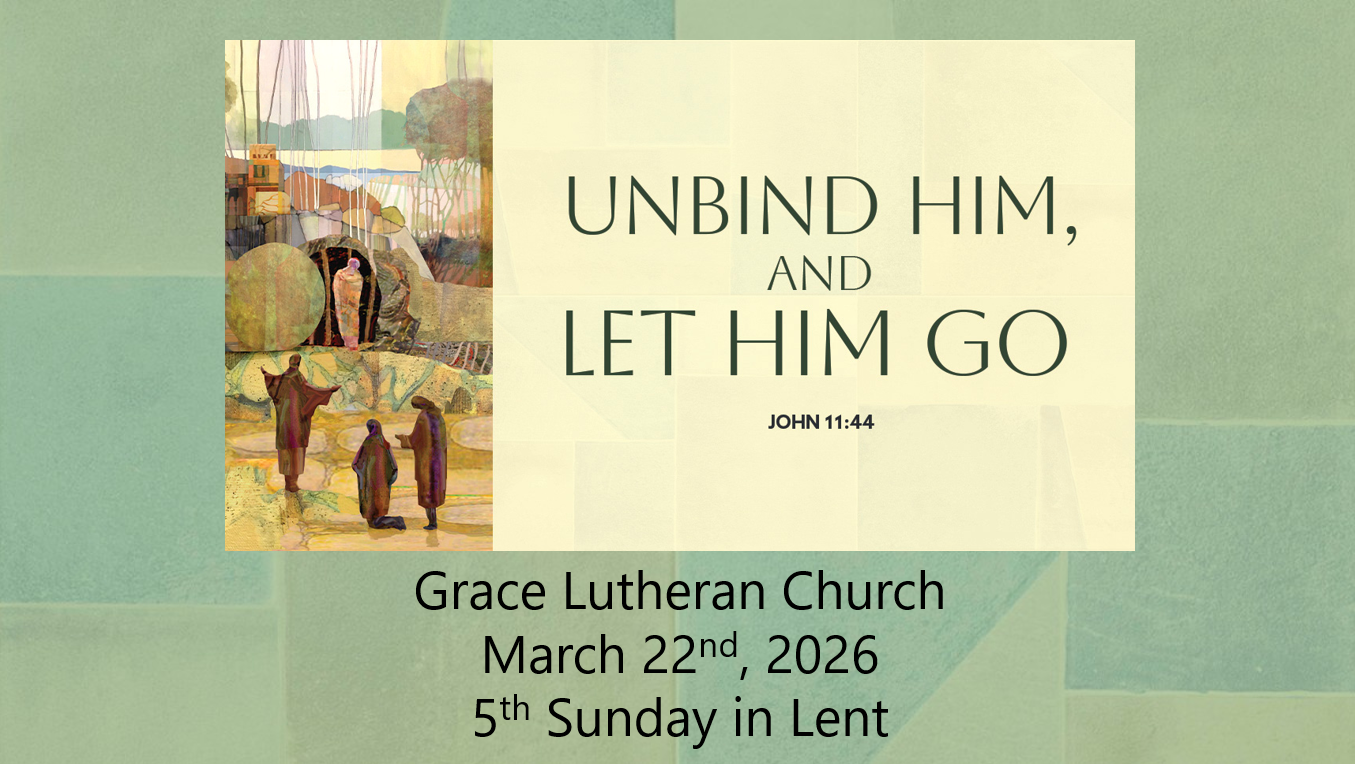
“Unbind him, and let him go.”
Jesus’ words to the people after bringing dear Lazarus back to life and out of the dark, cold, and smelly tomb now hit a bit differently. They now shed a new light on the feelings and emotions that we all might have been feeling and emoting. They now reveal to them and us the life that truly is life, a life in community, in relationship, and in the freedom to be.
Free to be human. Free to be healed. Free to be loved even in our flaws.
Because I think that is what that micro-managing control over our emotions robs us of. When we are stuck in the fear of hard feelings, second-guessing our actions with the woulda/shoulda/coulda’s, and trapped in need to rationalize away our feelings, cognitively fix away our problems, and desperately avoid any kind of conflict, we lose sight of God present in our lives: welcoming us into community, lifting us up in grace, and leading us to peace.
Peace not in the absence of conflict and friction, but peace in knowing that we are secure in our position as God’s people in spite of it all.
Now, this isn’t to say that we should go around picking fights and slapping people in the face. I’m not suggesting that we should point our fingers more pointedly, voice our criticisms more critically, or condescend others more condescendingly. I’m not telling anyone to run head first and incite conflict.
Instead, I’m saying that when these things happen, and they will happen, we needn’t be afraid because it is part of the human experience. When we feel those feelings that we might not want to feel, it’s ok to try to understand them instead of running away from them. When unwanted conflict arises, they can be for us learning opportunities to further deepen our sense of self, our love for others, and our faith in the God who breathes into us life and frees us from all that we’re trapped in.
To be honest, I will likely still not be all that comfortable with conflict. But thanks be to God, I can be confident in my identity in spite of it, I can trust in God’s promises of salvation even in the midst of it, and I can have faith that my feelings, be it negative or positive, will not disqualify me from being forgiven, healed, and saved.
As we near the end of this season of Lent and look forward to the glorious and salvific resurrection of our Lord, may we learn to see ourselves as who we are, recognise God’s role in our healing and making us whole, and be unbound and set free from all that traps us in believing we are anything but beloved. Thanks be to God. Amen.